

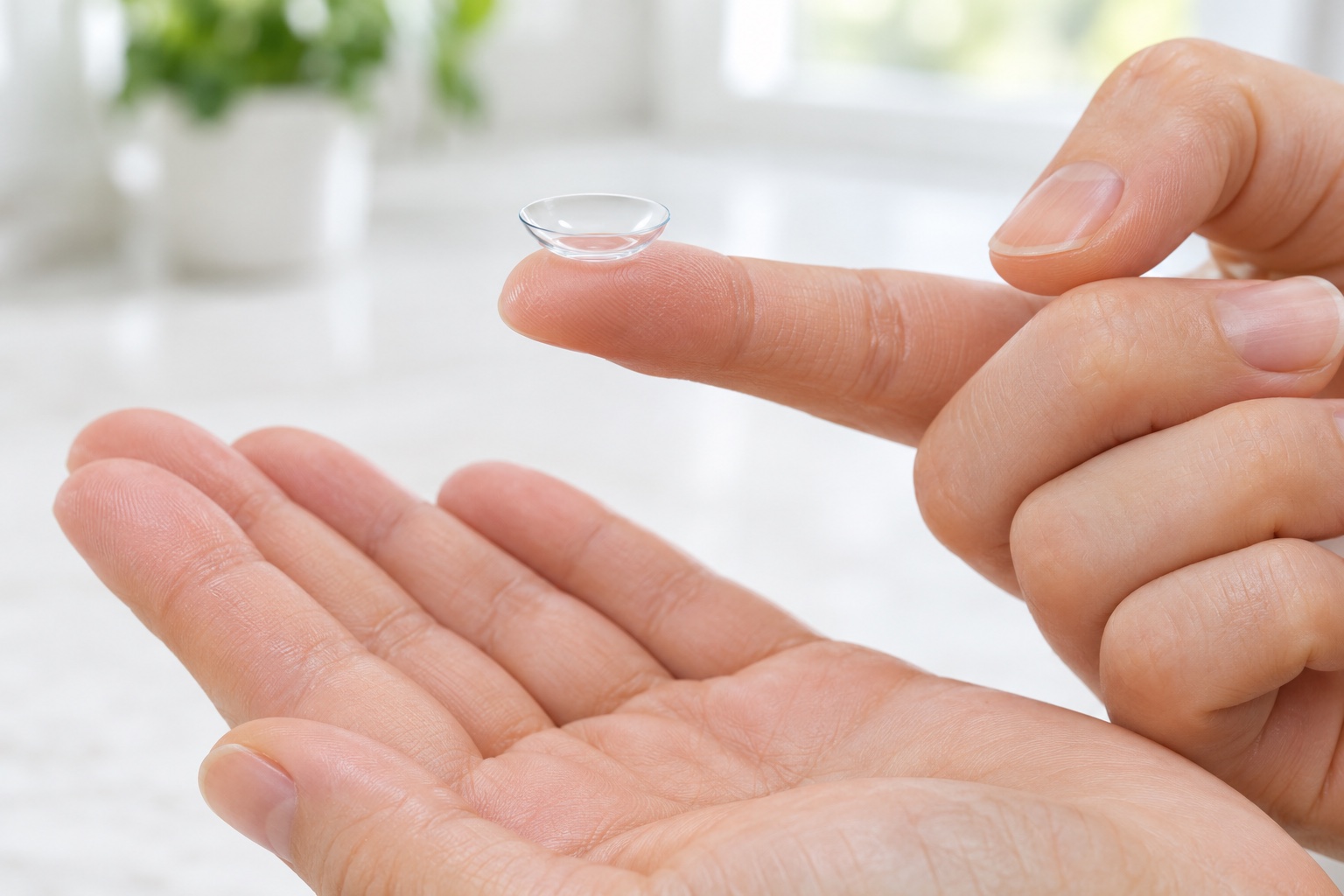
Contact lenses are classified by the FDA as medical devices, and the care routine matters as much as the lens design. The Centers for Disease Control and Prevention (CDC) has reported multiple outbreaks of serious eye infections in the United States since 2006, including Acanthamoeba keratitis and fungal keratitis. The CDC also notes that most contact lens wearers do not follow proper hygiene practices. The steps below are simple, and they make a real difference.
Quick answer: wash and dry your hands before handling lenses, follow your provider’s replacement schedule, never use tap water, replace your lens case regularly, and remove lenses before swimming or showering.
Why does handwashing come first?
Every time you touch your lenses, you can transfer germs from your hands to the lens and then to your eye. Wash your hands thoroughly with soap and water, then dry them completely with a clean cloth before handling lenses. Avoid touching your eyes or lenses with a wet or dirty hand.
Follow your replacement schedule
Replacement schedules depend on the type of lens and its material. Daily disposable lenses are discarded after each wear. Monthly and two-week lenses are replaced on a set timeline. The CDC advises following the replacement schedule your eye care provider recommends. Replacing lenses on time keeps deposits from building up, and deposits can affect both comfort and clarity. For those who are more prone eye infections (patients with severe dry eye and young patients), daily disposable soft lenses are the best option to start fresh with a clean lens each day.
Use the right solution, never water
Use the contact lens solution your provider recommends and follow the directions for cleaning and disinfecting. Never store or rinse lenses in tap water, since water can carry microorganisms that are harmful to the eye. Do not mix fresh solution with old solution in the case, and do not top off a partly used bottle. When you travel, pack fresh solution for storage and do not transfer solution from your regular bottle to a smaller travel-sized bottle. Solutions such as ClearCare and Tangible Clean can all be purchased in travel-sized bottles.
Care for your lens case
A neglected lens case can become a source of germs and biofilms. After each use, empty the case, rinse it with fresh multipurpose contact lens solution, and store it upside down with the caps off so it can air dry. Replace the case at least every three months, as the CDC recommends, and sooner if it becomes cloudy, cracked, or dirty. Many people forget the case entirely, so setting a reminder on your calendar can help. Large quantities of contact lens cases can be purchased for very cheap on Amazon, so replacing every month is preferred and easy to do.
Hydrogen peroxide systems such as CLEAR CARE require the manufacturer’s special neutralizing case; follow that system’s cleaning and replacement instructions.
Protect your eyes during daily life
Remove your lenses before swimming or showering, because water exposure can introduce serious players like acanthamoeba to the eye, which can result in sight-threatening infections. Never sleep in your contact lenses, as the lack of oxygen to the eye with the eyes closed, and a moist environment, makes infections much more likely. Insert lenses before applying makeup, and remove lenses before removing makeup, so that cosmetics do not reach the lens surface.
What about scleral and other specialty lenses?
Scleral lenses and other specialty designs often require a more specific cleaning and storage routine, and some may use preservative-free products. Your fitting team should give you written instructions tailored to your lens material and design. Following that plan closely matters, and it is a good topic to bring to every follow-up visit.
Warning signs to act on
Contact your eye care provider right away if you notice eye pain, redness, discharge, light sensitivity, or blurred vision. If you can remove your lenses safely and comfortably, do so, and do not wait for symptoms to pass on their own.
Frequently asked questions
Can I sleep in my contacts for a short nap?
Remove your lenses before sleeping, including naps, and before showering. Discard daily disposable lenses after removal. Clean and disinfect reusable lenses according to your provider’s and solution manufacturer’s instructions before wearing them again. If you use CLEAR CARE, use its special case and allow at least six hours for neutralization. Keep backup glasses available.
How often should I replace my lens case?
At least once every three months, according to the CDC, and sooner if the case looks damaged or dirty. Every month is preferred!
Are rewetting drops the same as cleaning solution?
No. Rewetting drops moisten lenses while they are in the eye. They do not clean or disinfect lenses, so follow your provider’s instructions for cleaning and storage.
Next steps
If your routine has slipped, or your lenses have not felt right lately, we can review your care and replacement plan with you. Call 480-420-4243 or request an appointment through our website. Patients in Scottsdale and across the country are welcome.
