If you wear scleral lenses, you know the frustration all too well: you start the day with crisp, clear vision—and then, hours later, a haze creeps in. Your first thought might be: “Is my lens fit off?”
Sometimes, the answer is no. And that’s actually good news, because it means other—often more treatable—culprits are at play.
First, Let’s Talk About the Fog
The “fog” you’re seeing isn’t always the same. Knowing where it’s coming from is the first step to fixing it.
- Front-Surface Fogging
This happens on the outside of the lens. Think of it like a dirty windshield. Causes can include:
– Poor tear film quality from conditions like Meibomian gland dysfunction (MGD) or dry eye
– Makeup or skincare products that leave oily residue on the lens
– Incomplete blinking during screen time
– Lens deposits from improper cleaning
What to look for:
Front-surface fogging often improves temporarily with blinking—your eyelid acts like a windshield wiper, spreading a fresh layer of tears across the lens surface. If you blink a few times and the haze clears, even briefly, you’re likely dealing with a front-surface issue.
However, if the fogging persists despite constant, frequent blinking—or returns within seconds of blinking—that’s a sign that your tear film quality could be severely compromised. In other words, your tears aren’t “sticking” to the lens surface long enough to keep it clear. This usually points to underlying dry eye or Meibomian gland dysfunction (MGD), where the oily layer of your tear film is insufficient to prevent rapid evaporation.
Bottom line: If blinking helps, even for a moment, you’re on the front surface. If blinking does nothing—or the fog returns almost instantly—it’s time to look deeper, likely at your tear film quality or what’s happening under the lens.
- Back-Surface Fogging (Sometimes referred to as “Midday” Fogging)
This is the more stubborn one. Debris builds up underneath the lens, in the fluid reservoir between the lens and your cornea. It’s incredibly common—affecting up to 46% of scleral lens wearers.
What to Look For:
Unlike front-surface haze, back-surface fogging doesn’t respond to blinking or artificial tears—no amount of rewetting drops will clear it up. That’s because the debris is trapped underneath the lens, in the fluid reservoir between the lens and your cornea.
If blinking does nothing and artificial tears offer zero relief, the only quick fix is removing the lens, rinsing it thoroughly with preservative-free saline, and reapplying it with a fresh fill.
Why this happens: Over the course of the day, inflammatory cells, mucus, and other particulate matter from your ocular surface accumulate in the fluid chamber. This is particularly common in patients with blepharitis, dry eye, or allergy-related inflammation. Treating the underlying ocular surface disease often reduces how frequently this fogging occurs.
Bottom line: If you’re reaching for artificial tears every few minutes with no improvement, the problem isn’t on the outside—it’s under the lens. Time to remove, rinse, and refill.
Understanding the Other Potential Culprits Behind the Fog
- Dry Eye & Meibomian Gland Dysfunction (MGD)
Here’s the dirty secret: midday fogging is strongly linked to dry eye severity. Your tear film quality matters. When your Meibomian glands aren’t producing enough oil, your tears evaporate too quickly—and the lens surface doesn’t stay wet.
Solution: Treating MGD with warm compresses and improved eyelid hygiene can make a real difference. There are also advanced treatments available to help, such as IPL, RF, and Tixel.
- Allergies
Allergy sufferers are more prone to scleral lens fogging and discomfort. The same inflammatory response that makes your eyes itchy can also:
– Increase mucous production
– Cause surface deposits on the lens
– Trigger giant papillary conjunctivitis (GPC)
Solution: Managing allergies—whether with antihistamine drops, supplements, or avoiding allergy triggers—can significantly improve lens tolerance and clarity.
- Inflammation & The Ocular Surface
Research suggests that inflammation, even when it’s subtle, plays a central role in midday fogging. Blepharitis, Demodex, and other eyelid issues contribute to the “particulate matter” that accumulates under the lens.
Solution: Treating the underlying ocular surface disease with prescription drugs before adjusting the fit of the lens is often the missing piece.
The Takeaway
If your scleral lenses are fogging:
- Rule out front-surface issues first: check your makeup, cleaning routine, and blinking habits.
- Evaluate your ocular surface: dry eye, MGD, inflammation, and allergies are often the root cause, not the lens fit.
- Work with your eye doctor to optimize your tear film before redesigning the lens.
The good news? *Most* fogging is manageable without a complete lens refit. Sometimes, the solution is simpler than you think!
Have questions about your scleral lens comfort? We’re here to help! Schedule a comprehensive evaluation with our dry eye and specialty contact lens team by calling, texting, or emailing us.
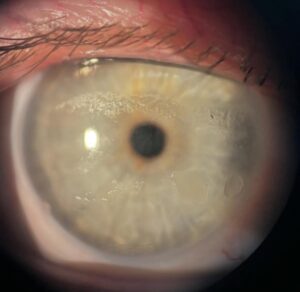
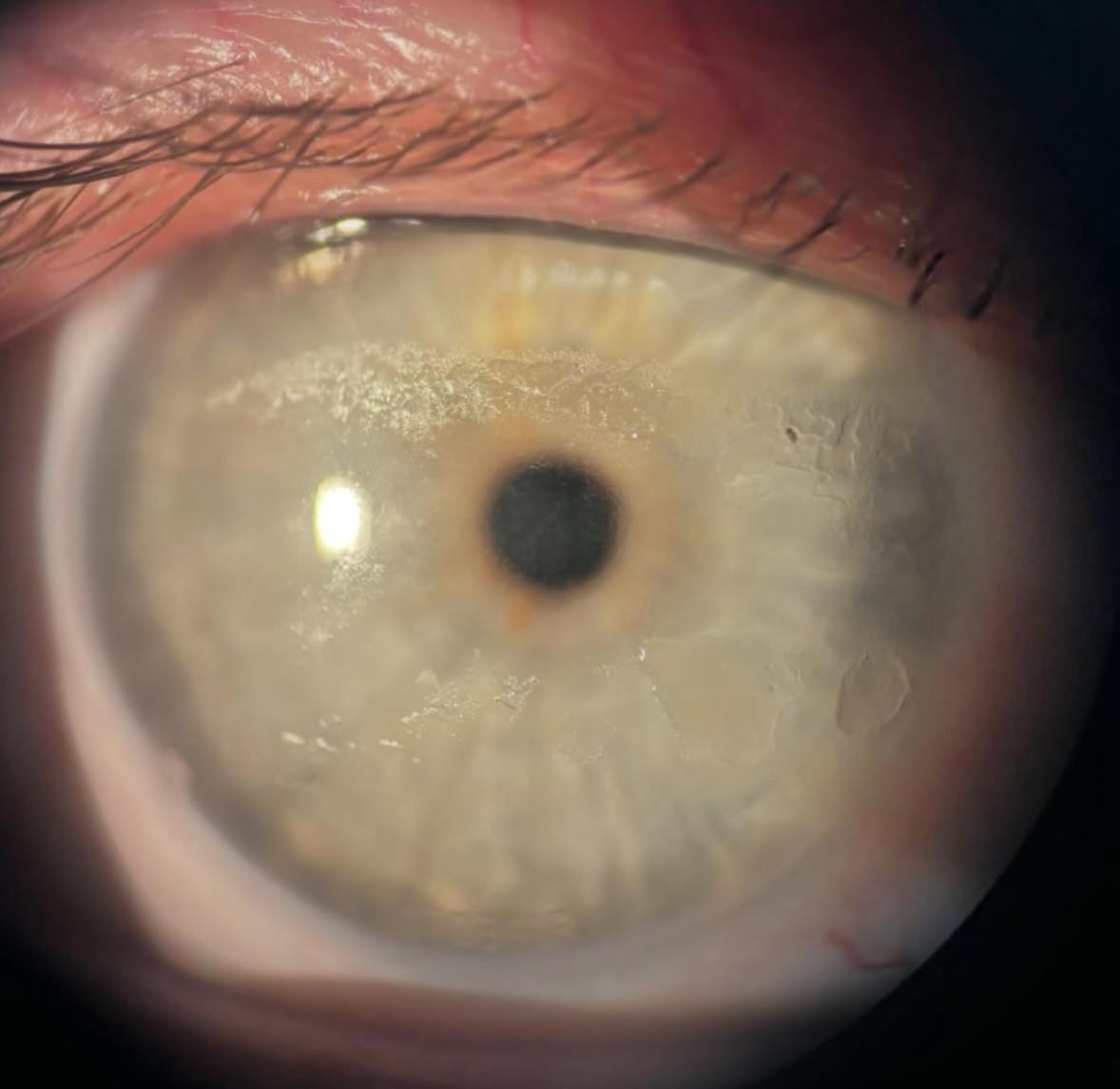
Pictured:
dense anterior surface deposits on scleral lenses due to deposits and debris from eyelid inflammation. When patients decrease inflammation on their eyelids, this depositing reduces dramatically.
Read more:
https://youreyesinfocus.com/post/get-rid-of-fogging-with-scleral-lenses/
https://youreyesinfocus.com/post/early-morning-tips-to-prevent-scleral-fogging/
https://youreyesinfocus.com/post/the-eyelid-spray-that-your-immune-system-already-loves-yes-really/
https://youreyesinfocus.com/post/larger-diameter-scleral-lenses-for-severe-dry-eye/