

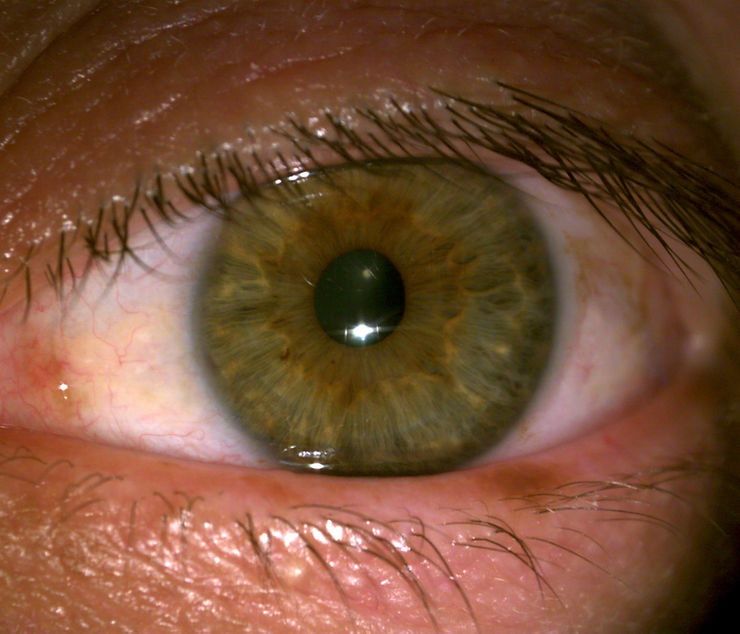
If you’ve struggled with chronic red eyelids, gritty-feeling eyes, or that frustrating “something is in my eye” sensation that never quite goes away, you’ve probably already tried warm compresses, lid scrubs, and artificial tears. And maybe, just maybe, you’re still searching for something that actually works.
Here’s some good news worth trying before you move on to prescription medications or advanced in-office procedures. While those treatments absolutely have their place for moderate-to-severe disease, many patients find that consistent use of a gentle, targeted eyelid spray can reduce symptoms enough to delay, or even avoid, stepping up to those next-level interventions.
Enter hypochlorous acid (HOCl) eye sprays.
If that name sounds clinical and a little intimidating, don’t worry. Here’s the simple truth: your body already makes this stuff naturally.
Beyond just calming inflammation and controlling bacteria, managing conditions like blepharitis, Meibomian gland dysfunction, and dry eye with HOCl has another major benefit: it helps patients wear scleral lenses longer and more comfortably. Cleaner, healthier lid margins mean less debris, less mucus buildup on the lens surface, and fewer midday fogging episodes—which translates to longer, more comfortable wear time for even the most sensitive scleral lens patients.
Let’s break down what hypochlorous acid is, why it’s becoming a favorite among eye doctors and their patients, and, most importantly, how to find a spray that’s actually safe for your eyes.
First, a Quick Science Hug (No Lab Coat Required)
Hypochlorous acid isn’t some lab-created chemical cocktail dreamed up in a pharmaceutical clean room. Your own white blood cells (neutrophils) produce HOCl every single day to fight bacteria, viruses, and inflammation. It’s a natural part of your immune system’s toolkit, think of it as your body’s own gentle disinfectant.
In ophthalmology, doctors have learned that a very dilute, purified version of HOCl can be sprayed directly onto closed eyelids and lashes to:
- Reduce harmful bacteria (including Staphylococcus and those pesky Demodex mites)
- Calm inflammation without damaging healthy skin or your precious tear film
- Support Meibomian gland function (those tiny oil glands along your lash line that keep tears from evaporating too fast)
→ Medical source: Biomedicines Journal, 2025 — “Hypochlorous Acid: Clinical Insights… in Ophthalmology”
So no, you’re not putting a harsh chemical on your eyes. You’re giving them more of what they already know how to use.
Who Should Use this Spray?
Most people start using HOCl sprays because they’ve been diagnosed with one (or more) of the following:
- Blepharitis (inflamed, scaly, sometimes crusty eyelid margins)
- Meibomian Gland Dysfunction (MGD) (the leading cause of evaporative dry eye)
- Dry eye syndrome (especially the type where your tears disappear too quickly)
- Demodex mite overgrowth (those tiny critters love lash follicles—yes, it’s as creepy as it sounds)
- Post-surgery or contact lens-related irritation (as an adjunct to your main treatment)
Instead of tea tree oil scrubs (which can sometimes sting) or baby shampoo (which was never actually designed for eyes and can disrupt your tear film), HOCl offers a gentle, spray-and-go option that fits into a busy morning or evening routine.
→ Medical source: Clinical research summary – Specialty Vision, 2024
One study found that regular use of an ophthalmic HOCl spray reduced lid margin bacteria by more than 90% while improving dry eye symptoms within 30 days. That’s real impact!
Not All Sprays Are the Same — Here’s the Real Difference
- Concentration: The Goldilocks Rule
For eyes and eyelids, the safe and effective range is 0.01% – 0.02% (roughly 100–200 ppm). That’s the sweet spot.
Concentration and Safety for Eyes
- 0.01% – 0.02% = ✅ Safe, non-cytotoxic (won’t damage your healthy eye cells)
- 0.05% or higher = ❌ Too strong – designed for wound care or surface disinfection, not eyes
- Purity and Stability: Not All Brands Are Equal
Premium brands (like Avenova, OCuSOFT) use a patented electrolysis process to achieve >99% purity and longer shelf stability (12–18 months). Generic sprays may degrade faster, especially if exposed to light or heat.
- Additives: Read the Label Like a Pro
What to Look For
- Pure HOCl
- Purified water only
- “For ophthalmic use” or “eyelid hygiene”
What to Avoid
- HOCl + silver ions (usually labeled for skin sanitizing, not eyes)
- Alcohol, preservatives, fragrances
- Sodium hypochlorite (that’s actual bleach)
- Delivery Method: Spray, Wipe, or Mist?
Most HOCl products are fine-mist sprays—easy, affordable, and hygienic. Some brands offer pre-moistened wipes (great for travel) or ultrasonic atomizers (fancy, but not necessary). For everyday eyelid hygiene, a simple spray is usually the best place to start.
The Real Benefits, Backed by Research
Here’s what *most* can expect if you use an HOCl spray consistently (typically twice daily):
✅ Kills bad bacteria without killing your good tissues
Unlike iodine or alcohol, HOCl is selectively antimicrobial. It disrupts bacterial cell membranes but leaves your healthy human cells alone. Smart, right?
✅ Reduces inflammation and redness
HOCl has immunomodulating properties. It doesn’t just clean; it *calms*.
→ Clinical finding: Patients using HOCl for blepharitis showed significant reduction in eyelid redness and irritation within 2 weeks.
✅ Helps unblock Meibomian glands
By keeping the lid margin clean, oil glands can release lipids more easily. That means a **more stable tear film** and less evaporation. For dry eye sufferers, this is huge.
✅ *May* reduce dependence on antibiotics or steroids
In some ophthalmology protocols, adding HOCl spray allowed doctors to **shorten the course** of antibiotic or corticosteroid therapy for moderate-to-severe blepharitis or keratitis.
→ Medical source: Adjuvant therapy research – Journal of Ocular Pharmacology and Therapeutics (2023 review)
Myth vs. Fact: What People Get Wrong About HOCl
Let’s bust a few common myths about HOCI! ❌ Myth vs. ✅:
- “It’s just diluted bleach.”
Bleach is sodium hypochlorite. HOCl is a completely different molecule—one your body makes naturally. - “It will sting and burn.”
At 0.01–0.02%, most people feel nothing. Some notice a faint cool mist. Stinging is rare and usually mild. - “You have to rinse it off.”
Nope. It evaporates cleanly in seconds. That’s part of why we love it! - “Any HOCl spray works the same.”
False. Concentration, purity, and manufacturing quality vary widely. Always check the label! - “It’s a replacement for prescription meds.”
Not exactly. It’s an adjunct, a powerful helper, not always a standalone treatment for severe cases, but something to try before moving on to treatments like Xdemvy (Rx required), or laser treatments like IPL, RF, or Tixel.
How to Use an HOCl Spray: A Step-by-Step Guide
Because even the best product won’t work if you use it wrong.
What you’ll need
– Your HOCl spray (0.01–0.02%, ophthalmic grade)
– A clean tissue or cotton pad (optional, for blotting)
Morning routine:
- Wash your face with a gentle, non-irritating cleanser.
- Pat skin dry (but don’t rub your eyes).
- Close your eyes **firmly but comfortably**.
- Hold the spray 4–6 inches from your face.
- Spray 1–2 times over each closed eyelid.
- Let it air dry for 5–10 seconds. No rinsing. No rubbing.
- Apply makeup or other eye drops as usual.
Evening routine:
- Remove eye makeup gently (oil-free remover is often best for MGD/dry eye).
- Repeat steps 3–6 above.
- Follow with a warm compress if your doctor recommended it.
- Go to bed with clean, calm lids.
Pro tip: Don’t spray directly into open eyes. The mist can cause temporary stinging if it hits the ocular surface. Closed lids only.
The “Safe to Use” Checklist (Save This for Shopping)
When you’re standing in a pharmacy aisle or shopping on line, use this checklist.
Look for:
– Concentration: 0.01% – 0.02% (100–200 ppm)
– Label: “For ophthalmic use” or “Eyelid hygiene”
– Ingredients: Only purified water + hypochlorous acid
– FDA clearance or medical device classification (some brands have it; not all require it, but it’s a trust signal)
Avoid:
– Sprays > 0.03% (too strong for eyes)
– Products with “sodium hypochlorite” (bleach)
– Added preservatives, alcohols, or fragrances
– Anything that says “topical sanitizer only” without eyelid safety data
A Quick Word on Safety
HOCl in the 0.01–0.02% range is generally recognized as safe (GRAS) for daily use. Side effects are rare but can include:
- Mild, transient stinging (usually from the spray mist hitting the surface of the eye itself—try closing your eyes more firmly next time)
- Very rare allergic-type reactions (discontinue if redness or swelling worsens—this is extremely uncommon)
Most people use it twice daily without any issue at all. And because it’s preservative-free, there’s no cumulative toxicity risk like you might get with some older-style eyelid wipes.
No rinsing required! That’s the beauty of a well-formulated HOCl spray. It evaporates cleanly, leaving nothing behind but cleaner, calmer lids.
—
Lifestyle-Focused Final Takeaway
Here’s the bottom line for real life:
If you’re tired of red, scratchy, or crusty eyelids—if you’re tired of explaining to people that “no, my eyes aren’t pink eye, they’re just *like this*”—hypochlorous acid isn’t a gimmick. It’s biomimetic science dressed up as a simple spray.
Your immune system already makes it. Now you can add a little extra support without the harsh chemicals, without the antibiotics, without expensive in-office procedures (though those definitely still have their place for advanced disease).
Think of HOCl like a daily multivitamin for your eyelid hygiene. It’s gentle enough for sensitive eyes, strong enough to actually make a difference, and simple enough to use while you’re half-awake in the morning.
Bottom line from the research:
A 0.01–0.02% hypochlorous acid ophthalmic spray significantly reduces eyelid bacteria, improves dry eye symptoms, and calms inflammation—with an excellent safety profile for daily use.
Give it two weeks. Most people notice a real difference by day 14. And if you don’t? At least you’ll know you tried the gentle, science-backed option first, and options like Xdemvy prescriptions, radiofrequency (RF), intense pulsed light (IPL), or Tixel could be the next steps.
—
Sources Cited (Medical & Clinical)
- *Biomedicines* Journal, 2025 – “Hypochlorous Acid: Clinical Insights and Emerging Applications in Ophthalmology”
- Specialty Vision Clinical Review – “Hypochlorous Acid for Dry Eye & Demodex” (2024)
- Avenova / Novabay Pharmaceuticals – FDA 510(k) clearance & stability data
- *Journal of Ocular Pharmacology and Therapeutics* – Adjuvant HOCl use in blepharitis management (2023)
- OCuSOFT clinical summary – Eyelid hygiene and Meibomian gland health
- Multiple ophthalmology toxicology studies – Ocular epithelial safety of 0.01% HOCl
_________
Google post:
The Eyelid Spray Your Immune System Already Loves
If you’ve struggled with red, gritty, or irritated eyelids—and warm compresses and artificial tears haven’t fixed it—here’s good news worth trying before prescription drops or laser procedures.
Enter hypochlorous acid (HOCl) eye sprays.
Your body actually makes HOCl naturally to fight bacteria and inflammation. Ophthalmologists now use a gentle, diluted version (0.01–0.02%) as a spray for closed eyelids.
HOCI could potentially help patients with any of the following issues:
- Blepharitis,
- dry eye,
- Meibomian gland dysfunction,
- Demodex,
- Scleral lens discomfort – leaner lids mean less fogging and longer wear time.
The science: One study found HOCl reduced lid margin bacteria by over 90% and improved dry eye symptoms within 30 days.
Not all sprays are the same. Look for:
- 0.01–0.02% concentration
- “For ophthalmic use”
- No alcohol, or fragrances
How to use: Spray on closed lids twice daily, no rinsing required; it evaporates in seconds.
Bottom line: Try HOCl for two weeks before moving on to prescriptions like Xdemvy or laser treatments. With consistent use, many patients see real relief and may not have to move on to other options! Talk to your Dr to see what they recommend you try first.
If laser treatments are the recommended next step for you, we recommend Dr. Leah Johnson of Innovative Eyecare!
